A controlled value chain, from source to decision
We select, structure and transform data to make it usable
Strategic sourcing
Sources chosen according to your needs, not a generic catalogue
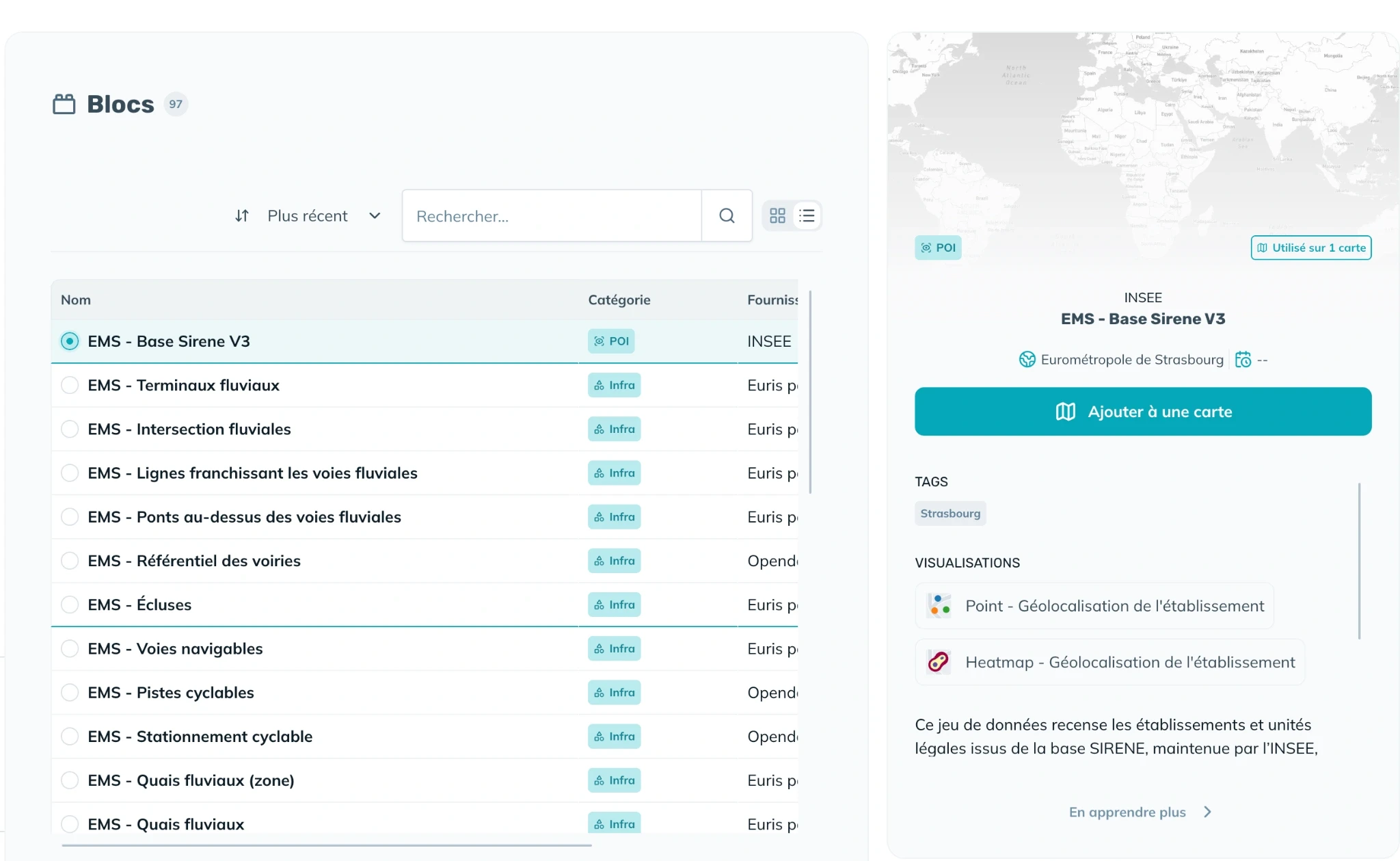
Urban Radar relies on a qualified network of public and private providers mobilised according to the issues addressed, the relevant variables and the territorial contexts studied. Our approach is not based on a fixed catalogue, but on identifying the data that are truly relevant to meeting an analytical need. Some decisive data do not appear in standard catalogues: they are sought out, contextualised and mobilised when they provide additional observational value. Sourcing is not an isolated upfront step; it forms the first level of quality in the analysis.
Multi-source aggregation
Cross-reference the right sources to reveal hidden dynamics
No single data source can cover the complexity of an area on its own. Urban Radar combines partner data, field sensors, open sources and specialist datasets to produce a more robust reading of the phenomena observed. This multi-source approach helps surface signals that no single source could identify on its own. The value does not come from accumulating data, but from their coherence, how they connect and the context in which they are interpreted.
Transform raw data into a usable database for analysis
Capabilities activated according to your needs
Raw data alone does not produce decision-making value. Cleaning, normalisation, enrichment, extraction and structuring make it possible to transform heterogeneous sources into reliable datasets ready for analysis. This work forms the foundation for the indicators, map visualisations and analytical processing used within the platform. The quality of the results depends directly on the quality of this structuring.
Coverage and compliance
Data that can be mobilised within a controlled and documented framework
Data use is governed by requirements relating to coverage, compliance and traceability. Each source is assessed according to its quality, its scope of use, its regulatory framework and the conditions under which it is used. This requirement makes it possible to produce reliable, documented analyses suited to operational or institutional uses. Compliance is not a peripheral constraint: it is an integral part of data quality.